Alcohol Dilution Calculator

Calculate how much water to add when diluting ethanol, isopropanol, or spirits from one ABV to a lower target strength. The tool also converts ABV to U.S. proof and plans batch volumes with overage.

Calculate alcohol stock volume and water volume

Enter stock ABV, target ABV, and final volume. Results update live and show alcohol stock volume, water volume, dilution factor, proof, and batch totals.

Start with a common alcohol dilution

Choose a preset for ethanol, spirits, or proofing math. Then edit ABV, proof, final volume, and batch settings.

Alcohol strength and volume inputs

Enter alcohol strength as ABV. In the United States, proof is twice ABV, so 40% ABV equals 80 proof.

Stock proof

190

Target proof

140

Dilution result

Use these volumes as a practical planning estimate. Verify regulated proofing with calibrated instruments and official tables.

Alcohol stock
Water

Alcohol stock

736.84 mL

Water / diluent

263.16 mL

Final volume

1000 mL

Dilution factor

1.357×

Stock ABV divided by target ABV.

Water-to-alcohol ratio

0.357:1

Approximate water volume per 1 volume of alcohol stock.

Check before mixing

  • High-strength ethanol and water can contract when mixed. For regulated proofing, verify with calibrated instruments and official tables.
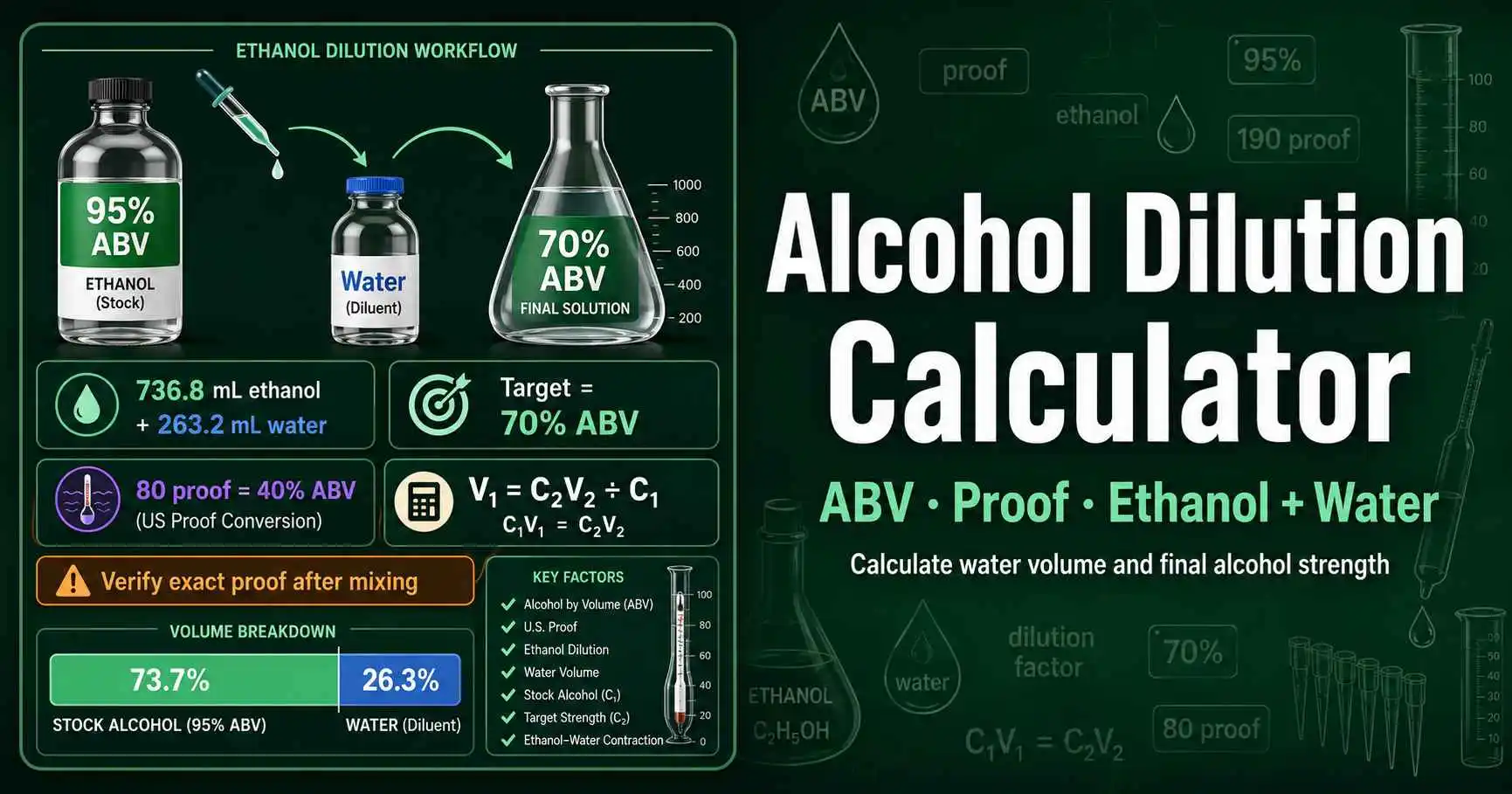
Diagram showing alcohol dilution from stock ABV to target ABV with water volume, proof conversion, and final volume.
Figure 1. Alcohol dilution uses the same conservation idea as C₁V₁ = C₂V₂. Ethanol amount stays constant while water increases final volume and lowers alcohol by volume.

How ABV dilution works

ABV means alcohol by volume. A 70% ABV solution contains 70 mL ethanol in every 100 mL of solution under the measurement conditions. Dilution lowers ABV because you add water while the ethanol amount stays the same.

The working formula is V₁ = C₂V₂ ÷ C₁. C₁ is stock ABV, C₂ is target ABV, V₂ is final volume, and V₁ is the alcohol stock volume. Use the solution dilution calculator for non-alcohol stock solutions that use the same C₁V₁ equation.

U.S. proof equals twice ABV. The Alcohol and Tobacco Tax and Trade Bureau defines a proof gallon using alcohol strength at 60°F, which shows why exact proofing depends on defined measurement conditions. See TTB definitions.

Formula and proof conversion

Alcohol stock volume

V₁ = C₂ × V₂ ÷ C₁

Diluting 95% ethanol to 70% in 1,000 mL uses 736.8 mL ethanol stock.

Water volume

Water = final volume − stock volume

The same example needs about 263.2 mL water before exact proof verification.

U.S. proof

Proof = 2 × ABV

40% ABV equals 80 proof. 95% ABV equals 190 proof.

What each part of the alcohol tool does

Each input controls a different part of the dilution plan. Use the table to decide whether you need a quick one-tube calculation or a batch setup.

Stock ABV

The strength of the alcohol you already have, such as 95% ethanol or 40% spirit.

Target ABV

The lower strength you want after adding water or another compatible diluent.

Final volume

The amount of diluted alcohol you want to prepare in one bottle, flask, or tube.

Current stock volume

Advanced mode can solve how much water to add to an alcohol volume you already measured.

Batch overage

Adds extra volume for transfer loss, bottle dead volume, or repeated aliquots.

Proof output

Shows U.S. proof as twice ABV for quick spirits-style interpretation.

Worked examples for ethanol and proof dilution

Dilute 95% ethanol to 70%

To prepare 1,000 mL of 70% ethanol from 95% ethanol, calculate V₁ = 70 × 1,000 ÷ 95. The stock volume equals 736.8 mL. Add about 263.2 mL water to reach the planned final volume.

For validated disinfection or regulated production, verify final strength after mixing. Ethanol and water can contract, so volume math gives a planning estimate rather than a certified proof value.

Convert 190 proof to 80 proof

Convert proof to ABV first. 190 proof equals 95% ABV, and 80 proof equals 40% ABV. To make 750 mL at 40% ABV, use V₁ = 40 × 750 ÷ 95 = 315.8 mL of 190-proof alcohol.

The water estimate equals 750 − 315.8 = 434.2 mL. Use the dilution ratio calculator when a protocol gives a simple 1:X dilution instead of ABV or proof.

When simple ABV math is not enough

Use this tool for educational planning, lab preparation estimates, and quick proof conversions. Use calibrated alcoholmeters, temperature correction, and official alcoholometric tables when legal, tax, label, or quality-control decisions depend on exact alcohol strength.

Ethanol-water contraction, temperature, dissolved solids, sugars, and flavor compounds can change measured strength. That is why a beverage, tincture, fuel, or disinfectant specification may require measurement after mixing. For ordinary lab dilution math, the same logic behind the dilution factor calculator still explains the fold change.

Related dilution tools

Alcohol dilution questions

How do I dilute 95% alcohol to 70%?

Use V₁ = C₂V₂ ÷ C₁. For 1,000 mL of 70% alcohol from 95% stock, use 736.8 mL of 95% alcohol and add about 263.2 mL water. Mix slowly and verify the final strength if the result matters for regulated proofing or a validated lab protocol.

What is the difference between ABV and proof?

ABV means alcohol by volume. In the United States, proof equals twice the ABV value, so 40% ABV equals 80 proof and 95% ABV equals 190 proof. Other proof systems have existed historically, so use ABV when you need unambiguous scientific or label-style calculations.

Does alcohol dilution follow C1V1 = C2V2 exactly?

The simple calculation works well for planning volumes because it tracks the amount of ethanol before and after dilution. Real ethanol-water mixtures can contract when mixed, especially at high alcohol strengths. Use official alcoholometric tables, a calibrated alcoholmeter, or validated lab procedures when exact proof matters.

Can I use this for ethanol disinfectant preparation?

Yes, you can plan ethanol dilution by ABV when you know the stock strength and target strength. For example, 95% ethanol diluted to 70% uses a 1.357× dilution factor. Follow your institution’s safety procedure, label the container, and account for flammability and storage requirements.

Can this calculator dilute spirits by proof?

Yes. Enter proof divided by 2 as ABV, or use the proof value shown beside each ABV input. For example, 190 proof equals 95% ABV, and 80 proof equals 40% ABV. The tool returns water volume and final volume, but exact beverage proof may require temperature-corrected measurement.

Why can the final measured volume differ from alcohol plus water?

Ethanol and water do not always add perfectly by volume. Molecules pack differently after mixing, so the final volume can be slightly lower than the sum of the starting volumes. This contraction matters most when high-strength alcohols need exact proof, taxation, labeling, or quality-control values.

What should I do if the water volume is negative?

A negative water volume means the requested target ABV exceeds the stock ABV. You cannot dilute a weaker alcohol into a stronger one by adding water. Use a stronger stock or lower the target strength.