The Three Primary Genes That Determine Horse Coat Colour
Horse coat colour is a classic example of epistasis — where one gene masks or modifies the expression of another. The three primary loci work in a strict hierarchy: Extension sets the base pigment capacity, Agouti controls its distribution (but only if Extension allows black pigment), and Cream dilutes the resulting colour.
1. Extension Locus — MC1R Gene (Chromosome 3)
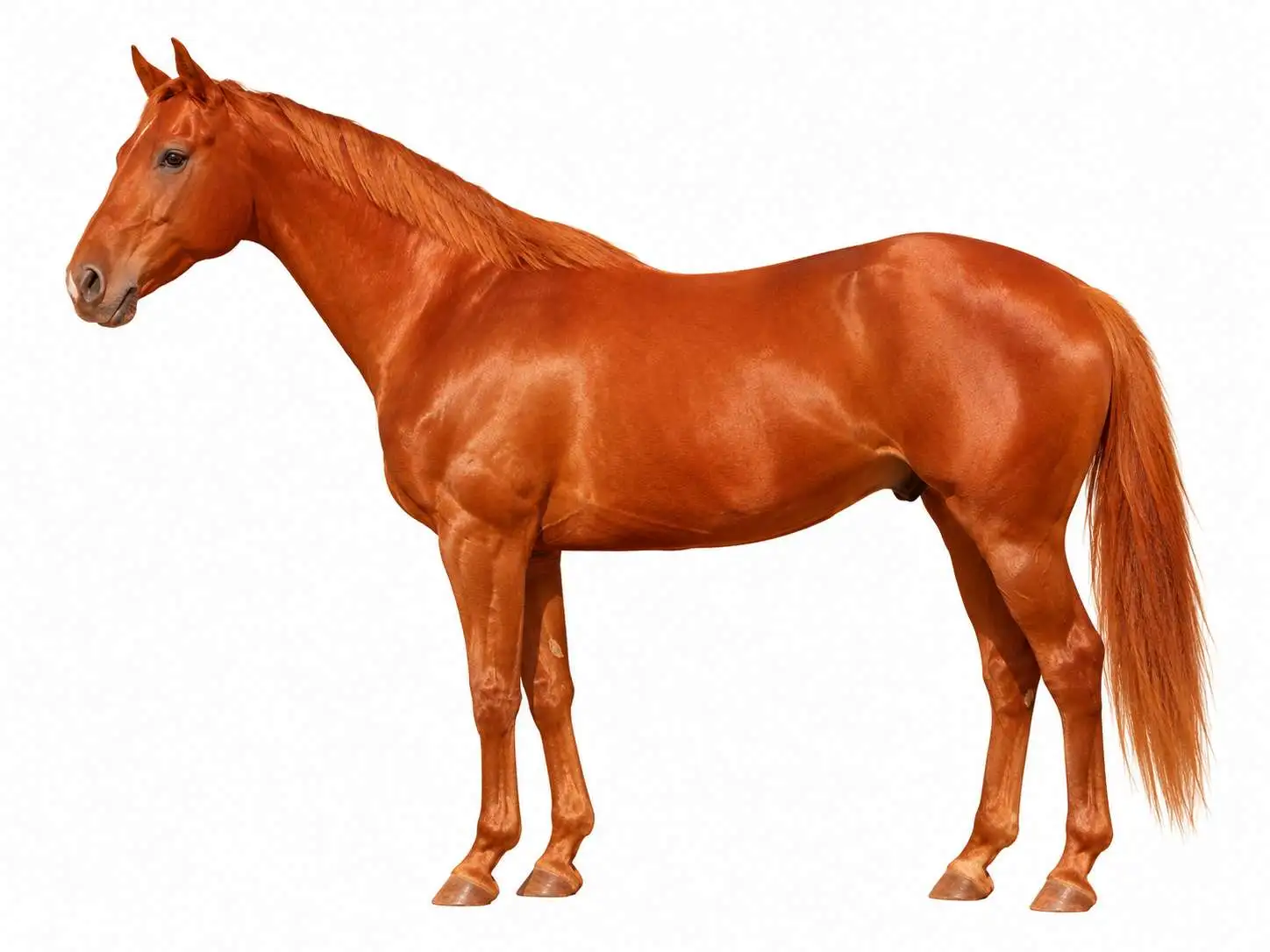
The Extension locus encodes the melanocortin 1 receptor (MC1R), a G-protein-coupled receptor on melanocyte surfaces. When activated by alpha-MSH, MC1R triggers the switch from pheomelanin (red/yellow) to eumelanin (black/brown) synthesis. Horses with at least one dominant E allele (EE or Ee) produce functional MC1R and can make black pigment throughout the body. Horses homozygous recessive (ee) have non-functional MC1R — they can only produce pheomelanin and are therefore chestnut.
EE
Homozygous dominant. Always passes E. All offspring can produce black pigment.
Ee
Heterozygous. Passes E or e with equal probability. Phenotypically non-chestnut.
ee
Homozygous recessive. Chestnut base. Can only pass e. No black pigment possible.
2. Agouti Locus — ASIP Gene (Chromosome 22)
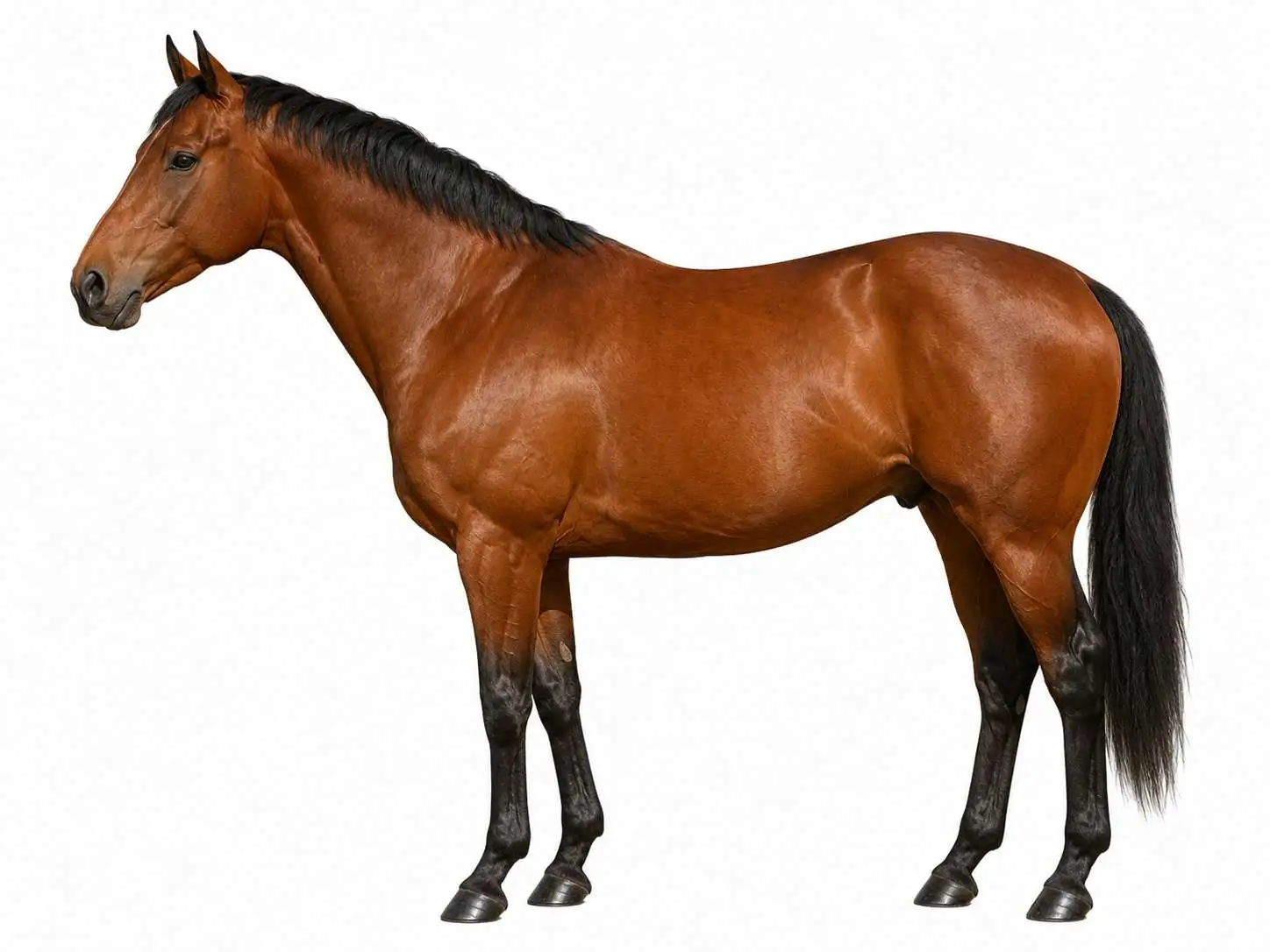
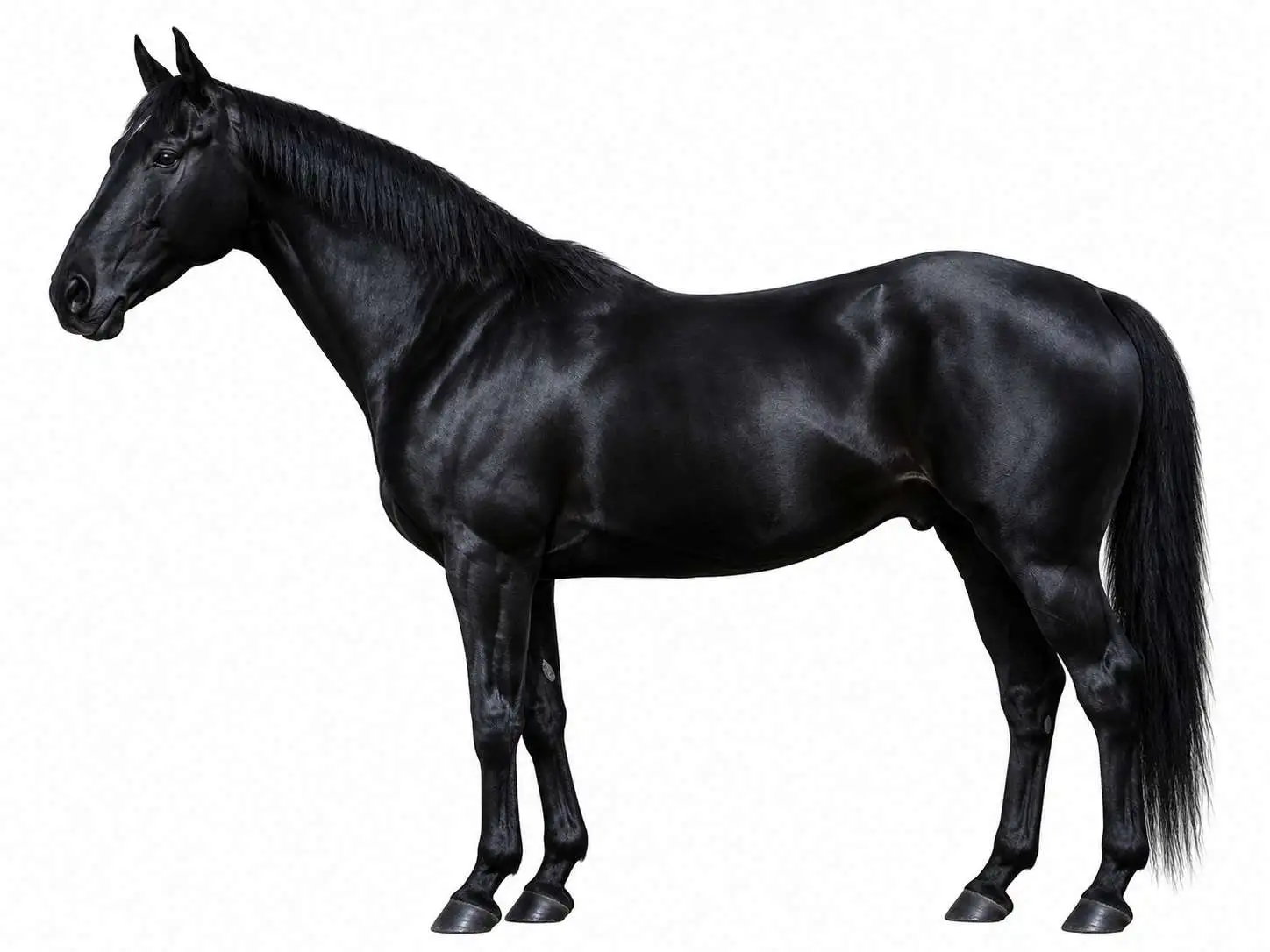
The Agouti locus encodes the agouti signalling protein (ASIP), an antagonist of MC1R. ASIP competes with alpha-MSH for MC1R binding. Where ASIP is active, it inhibits eumelanin synthesis and promotes pheomelanin production. In bay horses (A_), ASIP expression is restricted to specific body areas — the points (mane, tail, lower legs) — leaving the body reddish-brown. In black horses (aa), loss-of-function mutations in ASIP mean the inhibitor is absent, allowing uniform eumelanin deposition. The Agouti locus only has a visible effect when the horse can produce black pigment (E_ genotype) — it is completely epistatic to Extension in chestnut horses.
AA
Homozygous dominant. Bay. Always passes A — no black offspring possible.
Aa
Heterozygous. Bay phenotype but carries black allele. Can produce black offspring.
aa
Homozygous recessive. Black. ASIP non-functional — eumelanin throughout.
3. Cream Gene — SLC45A2 / MATP Gene (Chromosome 21)
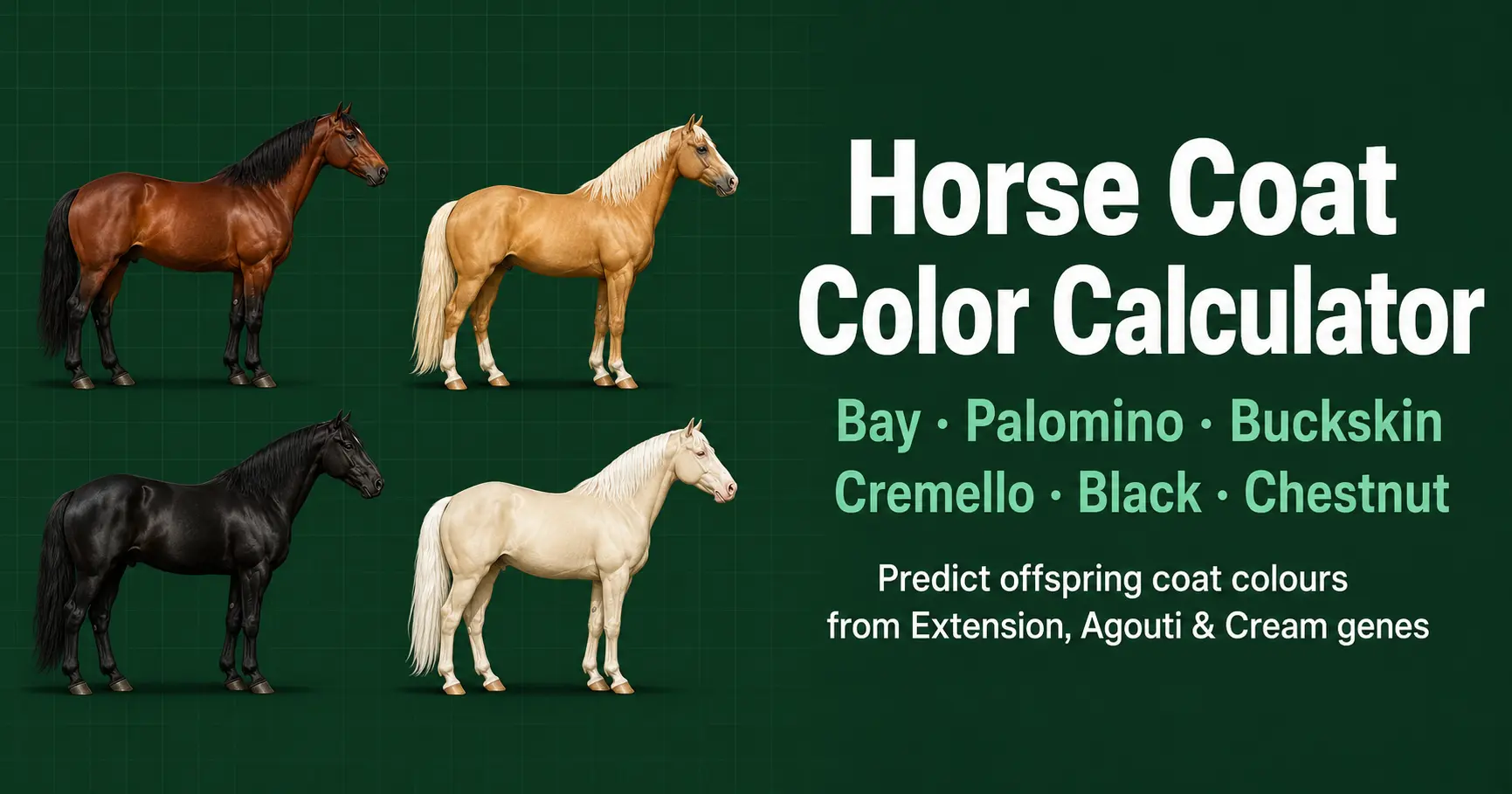
The Cream gene (a variant in the SLC45A2 gene, also historically called MATP) is an incomplete dominant dilution gene. It reduces pigment density in both eumelanin and pheomelanin pathways, but affects pheomelanin more strongly. One Cream copy (nCr, heterozygous) dilutes chestnut to palomino and bay to buckskin. Two Cream copies (CrCr, homozygous) produce a much stronger dilution: chestnut becomes cremello (pale cream body, blue eyes, pink skin), bay becomes perlino (cream body with slightly darker mane and tail), and black becomes smoky cream. The Animal Genetics equine cream gene reference provides molecular detail on the SLC45A2 variant responsible.
nN — No Cream
No dilution. Base coat colour fully expressed.
nCr — 1 Copy
Single dilution. Palomino (chestnut) or Buckskin (bay).
CrCr — 2 Copies
Double dilution. Cremello (chestnut) or Perlino (bay).
How Extension, Agouti, and Cream Combine — Full Coat Colour Reference
The final coat colour depends on which alleles are present at all three loci simultaneously. Extension acts as the master switch. Agouti is only relevant in E_ horses. Cream modifies the resulting base colour.
| Extension | Agouti | Cream | Coat Colour |
|---|---|---|---|
| E_ | A_ (bay base) | None (nN) | Bay |
| E_ | aa (black base) | None (nN) | Black |
| ee | Any (irrelevant) | None (nN) | Chestnut |
| E_ | A_ (bay base) | 1 copy (nCr) | Buckskin |
| E_ | aa (black base) | 1 copy (nCr) | Smoky Black |
| ee | Any | 1 copy (nCr) | Palomino |
| E_ | A_ (bay base) | 2 copies (CrCr) | Perlino |
| E_ | aa (black base) | 2 copies (CrCr) | Smoky Cream |
| ee | Any | 2 copies (CrCr) | Cremello |
Worked Horse Colour Genetics Examples
Example 1 — Two Palomino Parents
Palominos are genotype ee (chestnut base) + nCr (one Cream gene). Breeding two palominos produces offspring across three colours in the Cream locus — a classic incomplete dominance cross for the Cream gene.
Example 2 — Two Bay Heterozygotes: Bay × Bay
Bay horses that are heterozygous at both Extension (Ee) and Agouti (Aa) can produce four different coat colours, including black foals — despite both parents appearing bay.
Example 3 — Can Two Chestnut Horses Produce a Bay Foal?
No. Chestnut is the recessive base colour at the Extension locus. Both parents are ee genotype and can only pass on e alleles. Every offspring is ee — chestnut. Agouti and Cream genes are irrelevant because no black pigment can be produced.
Chestnut × Chestnut = Always Chestnut
This is the most reliable rule in horse colour genetics. A foal claiming to be bay from two registered chestnut parents indicates either a recording error or non-parentage.
Other Horse Coat Colour Genes Not Modelled Here
Beyond Extension, Agouti, and Cream, numerous additional genes modify horse coat colour. Each follows its own inheritance pattern, and some involve dominant white mutations with potential homozygous lethal effects.
Grey (STX17)
Progressive greying with age. One dominant Grey allele causes gradual depigmentation of the coat. All grey horses will eventually go white regardless of base colour. Dominant — a single copy is sufficient.
Dun (TBX3)
Produces a distinctive dilution with a dorsal stripe, leg barring, and sometimes a shoulder stripe ("primitive markings"). Dun dilutes black pigment to mouse-grey and red pigment to yellow.
Roan (KIT region)
Causes an even mixture of white and coloured hairs throughout the coat. Heterozygous roan horses maintain coloured head and points. Classic roan is dominant — homozygous roan may be embryonic lethal.
Silver (PMEL17)
Specifically dilutes eumelanin (black pigment) to a silver or chocolate colour. Affects black points in bay horses and the entire coat in black horses. Can produce silver dapple when combined with grey.
Champagne (SLC36A1)
A dominant dilution gene that dilutes both eumelanin and pheomelanin, producing gold (chestnut base), amber (bay base), or classic champagne (black base). Often confused with Cream.
Tobiano / Overo spotting (KIT, EDNRB)
White spotting patterns. Tobiano produces large white patches crossing the topline. Overo patterns (including frame overo) produce irregular white patches on the belly and sides. Frame overo homozygotes are often lethal.
For advanced equine genetic testing covering all these loci, the UC Davis Veterinary Genetics Laboratory offers comprehensive horse colour panels.
Frequently Asked Questions — Horse Coat Colour Genetics
What genes control horse coat colour?
How does the Extension locus determine base coat colour?
What is the difference between bay and black horses genetically?
Can two chestnut parents produce a bay or black foal?
How does the Cream gene produce palomino and buckskin?
Can two palomino horses produce a cremello foal?
What other horse colour genes are not included in this calculator?
Related Tools
Baby Genetics Calculator
Predict eye colour, hair colour, and blood type probabilities for human offspring.
Open CalculatorIncomplete Dominance Calculator
Model blended phenotypes — relevant to roan coat colour in cattle.
Open CalculatorPunnett Square Calculator
Full Mendelian genetics crosses — monohybrid to pentahybrid.
Open CalculatorCodominance Calculator
Both alleles expressed simultaneously — roan pattern in cattle.
Open Calculator