Genotype vs Phenotype: What's the Difference?
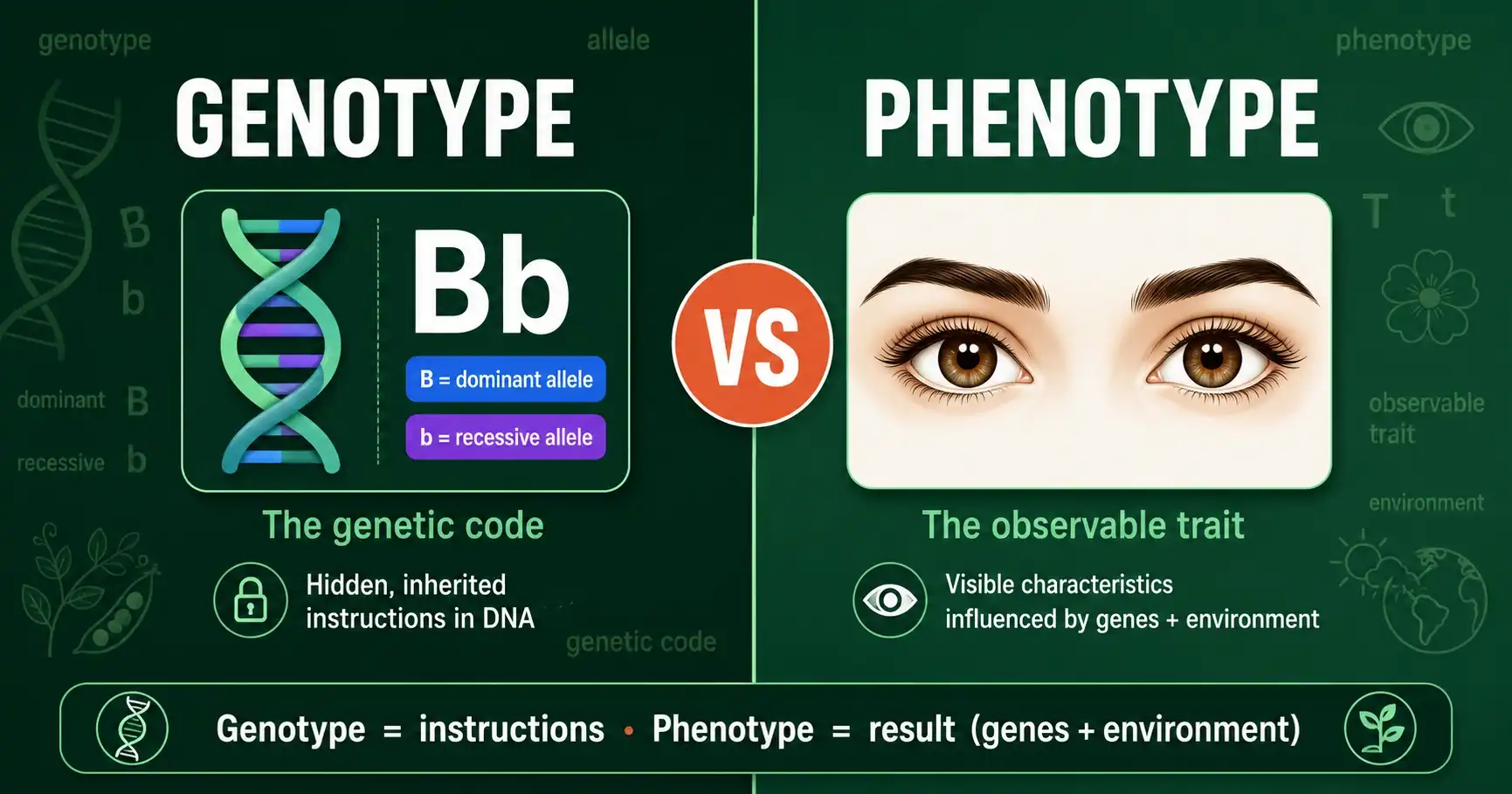
Genotype is the genetic code an organism carries in its DNA. Phenotype is the set of observable traits that code produces, such as height, eye color, or flower shape. The simplest way to hold the difference in your head: genotype is the instructions, phenotype is the result. A genotype like Bb is written in letters, while its phenotype, brown eyes, is something you can actually see.
The two are tightly linked but not the same. Your genotype is fixed at conception and stays with you for life. Your phenotype can shift, because it comes from your genes working together with the environment around you. This guide explains both terms clearly, shows how one produces the other, and walks through why two organisms with identical genotypes can still look different.
What Is a Genotype?
A genotype is the specific set of alleles an organism carries for a trait. An allele is one version of a gene, and most organisms carry two alleles per gene, one inherited from each parent. The pair you carry is your genotype for that trait.
Genotypes are written with letters. A capital letter marks a dominant allele and a lowercase letter marks a recessive one. For a single gene you can have three genotypes: homozygous dominant (BB), heterozygous (Bb), or homozygous recessive (bb). Homozygous means the two alleles match. Heterozygous means they differ.
The key feature of a genotype is that it is inherited and stable. You received your alleles from your parents, and they do not change based on diet, climate, or anything you do during your life. A genotype also includes information that may never show up in your appearance. A person carrying one allele for a recessive condition holds that allele in their genotype even though it stays hidden. That hidden information still matters, because it can be passed to the next generation.
What Is a Phenotype?
A phenotype is the collection of observable characteristics an organism actually displays. This covers far more than looks. Phenotype includes physical features like height and color, but also biochemical traits like blood type, physiological traits like disease resistance, and even behavior.
Here is the part that trips people up. A phenotype is not produced by genes alone. It results from the genotype interacting with the environment. The genotype sets the potential, and the environment shapes how that potential is expressed. A pea plant may carry alleles for tall growth, yet grow short in poor soil. The genotype said tall, but the conditions had the final word on the phenotype.
Because of this, a phenotype can change across a lifetime while the genotype stays put. Skin darkens with sun exposure. A plant grows fuller with better nutrition. None of these shifts alter the underlying DNA. The phenotype responds to the world; the genotype does not.
Genotype vs Phenotype: The Key Differences
The fastest way to separate the two is side by side. Each describes a different layer of biology, from the genetic code down in the cells to the traits you can observe.
| Feature | Genotype | Phenotype |
|---|---|---|
| Definition | The genetic code (alleles) | The observable traits |
| Example | Bb | Brown eyes |
| Inherited from parents | Yes, directly | Not directly |
| Can you observe it | No, needs a genetic test | Yes, by looking or measuring |
| Influenced by environment | No | Yes |
| Changes during life | No | Can change |
| Written as | Letters (TT, Tt, tt) | Words (tall, short, brown) |
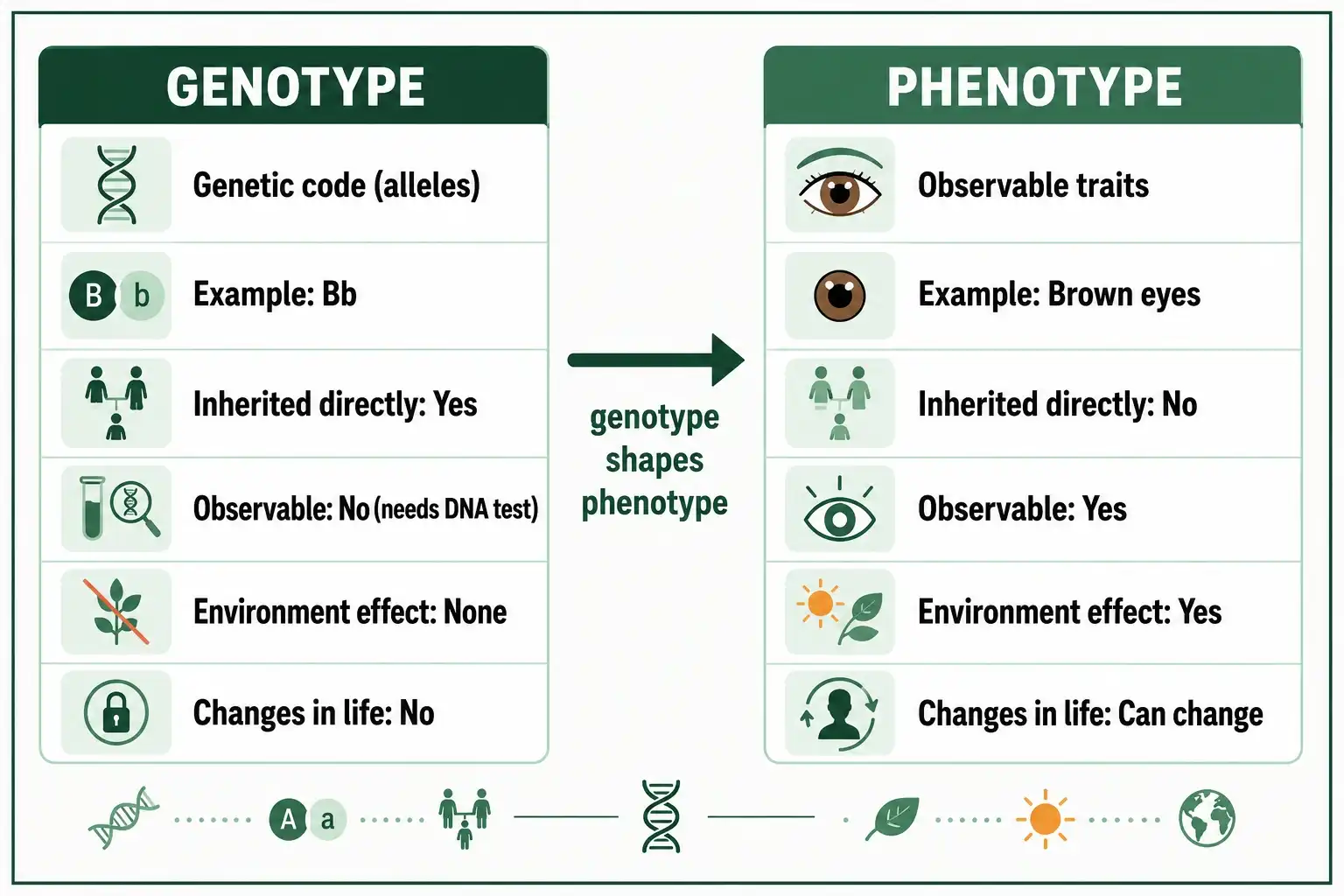
The relationship runs in one direction. A genotype influences a phenotype, but a phenotype cannot change a genotype. Tanning your skin does not edit your DNA, and a plant stunted by drought still carries its original tall-growth alleles. This one-way street is worth remembering, because it explains why acquired traits are not inherited.
How a Genotype Determines a Phenotype
A genotype produces a phenotype through proteins. Genes are instructions for building proteins, and proteins do nearly all the work of constructing and running an organism. The alleles you carry decide which versions of those proteins your cells make, and those proteins shape the trait you end up showing.
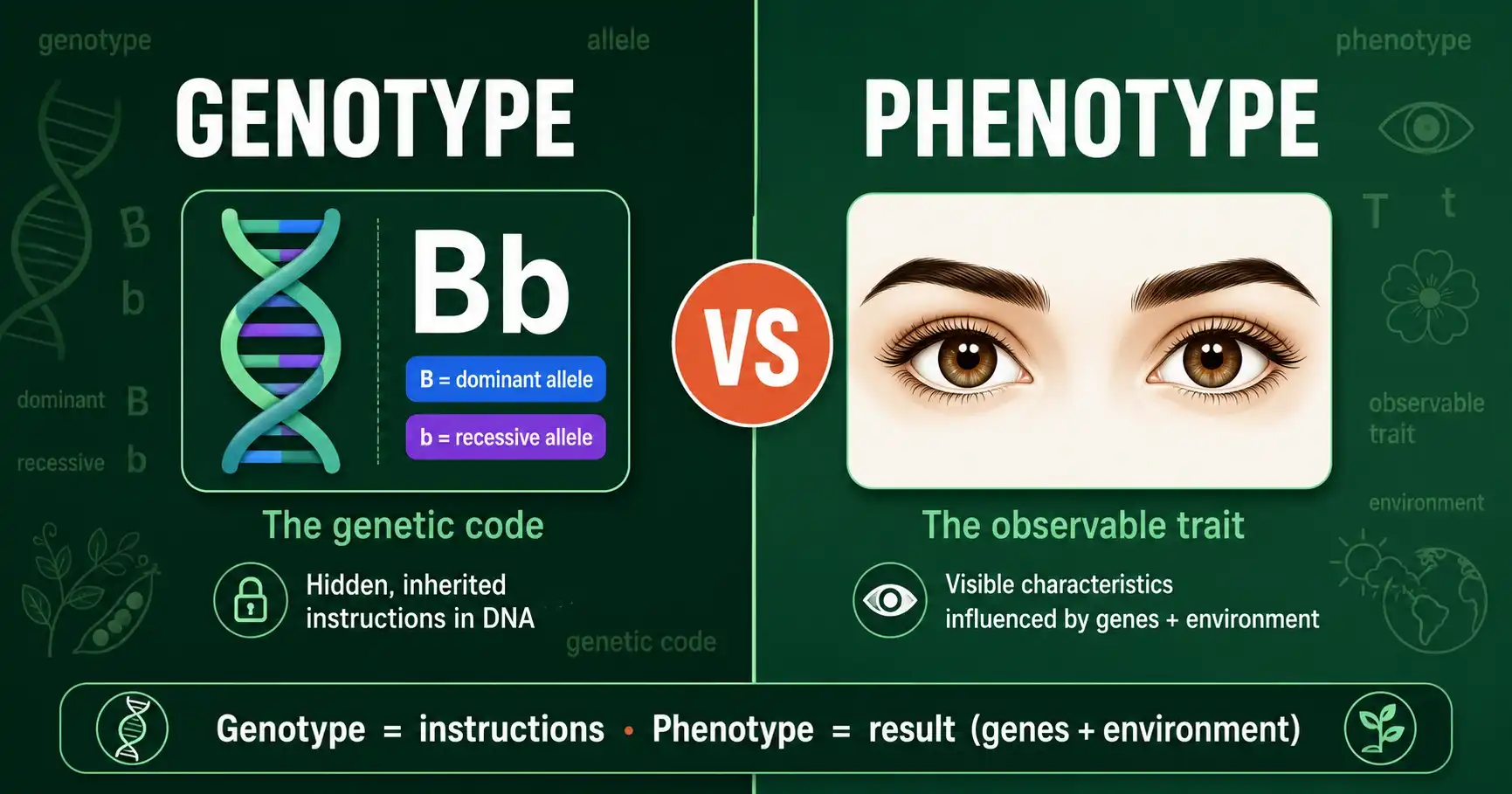
The chain is straightforward once you see it laid out. A gene is read and copied into a messenger molecule, that message is translated into a protein, and the protein carries out a job that contributes to a trait. Eye-color alleles, for example, direct how much dark pigment your cells produce, and the amount of pigment is what you see as brown or blue eyes. Change the allele and you change the protein, which changes the trait.
Dominance explains why the link is not always one to one. When a dominant allele is present, it usually produces a working protein that masks the effect of a recessive allele. That is why a heterozygous Bb individual has brown eyes just like a homozygous BB individual. Both make enough of the brown pigment. Only the homozygous recessive bb, with no dominant allele to override it, shows the recessive phenotype.
This is also why several different genotypes can share one phenotype. For pea plant height, both TT and Tt plants grow tall, because a single dominant T allele is enough. You cannot always read an organism's genotype straight from its appearance. A tall pea plant might be TT or Tt, and only a breeding experiment such as a test cross can tell them apart. To see this principle drawn out across a full cross, it helps to understand how a Punnett square works first.
Why the Same Genotype Can Produce Different Phenotypes
Two organisms with identical genotypes can look strikingly different, and the reason is the environment. Since phenotype equals genotype plus environment, changing the surroundings can change the visible result even when the genes are the same.
Flamingos make the point vividly. A flamingo is genetically white. Its famous pink color comes entirely from pigments in the shrimp and algae it eats. Remove those foods and the bird stays pale, despite carrying the same genes. You can read more about this environmental effect on phenotype here.
Siamese cats and Himalayan rabbits show another clean example. They carry a temperature-sensitive pigment allele, so fur grows dark only in the cooler parts of the body, the ears, paws, and tail, while warmer areas stay pale. Same genotype across the whole animal, different phenotype depending on temperature.
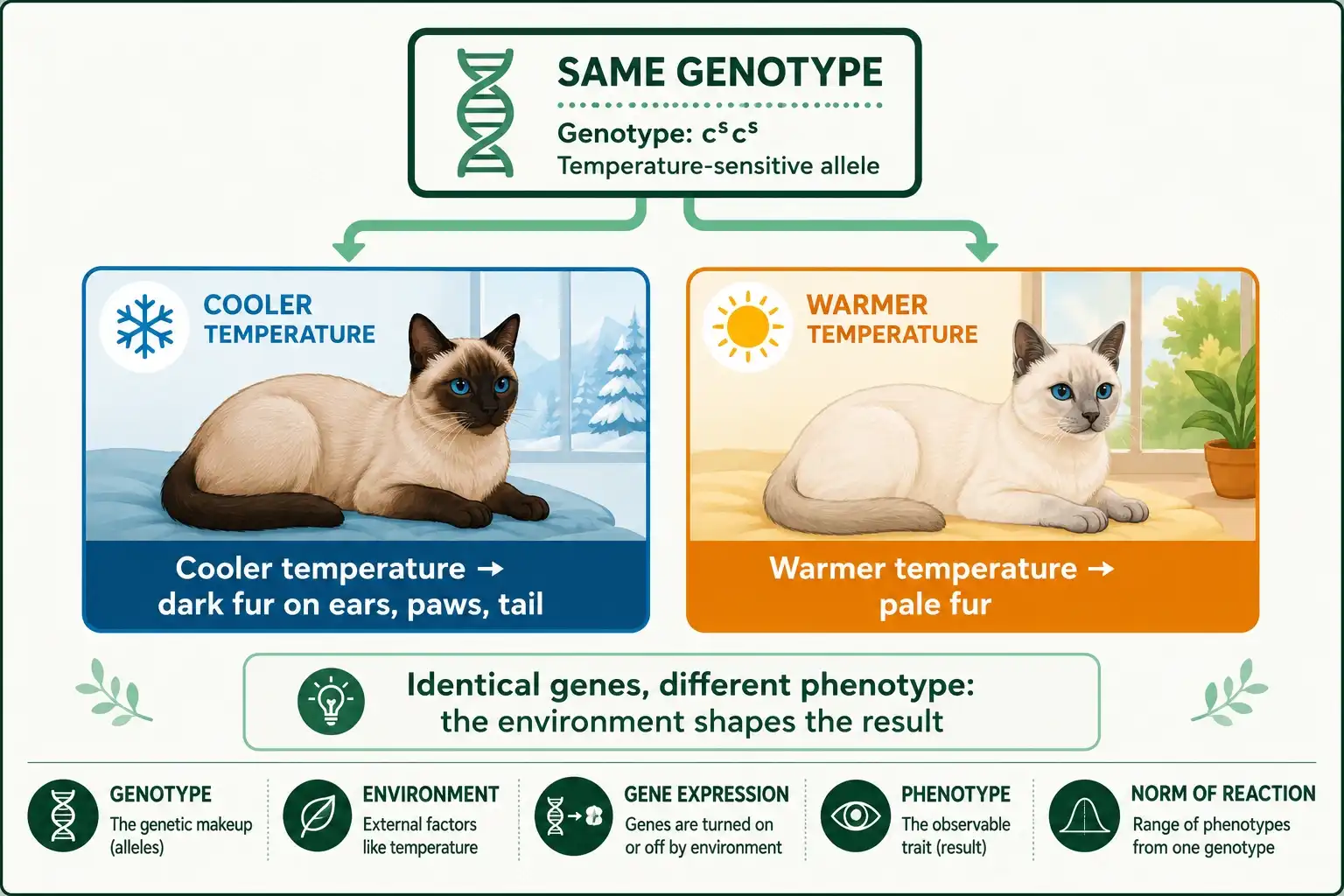
Geneticists describe this flexibility with the idea of a norm of reaction. A single genotype does not lock in one outcome; it maps to a range of possible phenotypes depending on conditions. A plant genotype might produce anything from a short, sparse plant in drought to a lush, tall one with ample water. The genes define the range, and the environment selects the point within it. This is why the same seed packet can grow into very different-looking plants in different gardens. For a deeper academic treatment of how this genotype-phenotype mapping is studied, this overview from News Medical is a useful reference.
Identical twins drive it home. Twins share the same genotype, yet they develop differences in height, weight, and health over time because they encounter different nutrition, stress, and lifestyles. Epigenetic changes, which adjust how genes are switched on and off without altering the DNA sequence, add another layer to this variation. The genotype is the starting hand; the environment plays it.
How Scientists Measure Genotype and Phenotype
Because the two layers are different, scientists measure them in different ways. Phenotyping means observing and recording traits directly. You measure a plant's height, weigh an animal, record a flower's color, or run a blood test for type. Anything you can see or quantify about the organism is part of its phenotype, so phenotyping is often a matter of careful observation and measurement.
Genotyping means reading the DNA itself. Instead of inferring genes from appearance, scientists examine the alleles directly using laboratory techniques such as DNA sequencing or targeted genetic tests. Genotyping can reveal hidden recessive alleles that never show up in the phenotype, which is exactly why a carrier of a recessive condition can be identified before any symptoms appear.
The gap between the two methods is the practical reason the distinction matters. A phenotype tells you what an organism looks like now. A genotype tells you what it carries and can pass on. Two pea plants that both look tall may hold different genotypes, TT and Tt, and only genotyping or a breeding test can separate them. This is the same problem a test cross was designed to solve before modern DNA tools existed.
Showing Genotype and Phenotype in a Punnett Square
A Punnett square is the clearest tool for separating the two, because it lets you count genotypes and phenotypes from the same cross. Each box in the grid is a possible offspring genotype, and grouping those boxes by appearance gives you the phenotypes.
Take a cross between two heterozygous parents, Bb and Bb. The four boxes come out as one BB, two Bb, and one bb. Read by genotype, that is a 1:2:1 ratio. Read by phenotype, the three boxes carrying a dominant B all look the same, giving a 3:1 ratio of dominant to recessive. The grid did not change. You simply counted it two different ways, which is the entire genotype-versus-phenotype idea in miniature. If you want the full walkthrough of where those numbers come from, you can read more here.
This is why naming the ratio matters in any genetics problem. Asking for the genotype ratio and the phenotype ratio gives different answers from one square. When you need to predict the odds of a specific visible trait quickly, a phenotype probability calculator does the counting and grouping for you.
Genotype and Phenotype Examples
Concrete examples lock the difference in. In each case below, notice how the lettered genotype maps to an observable phenotype, and how different genotypes can land on the same trait.
| Trait | Genotype | Phenotype |
|---|---|---|
| Pea plant height | TT or Tt | Tall |
| Pea plant height | tt | Short |
| Human eye color | BB or Bb | Brown eyes |
| Human eye color | bb | Blue eyes |
| Pea seed shape | rr | Wrinkled |
| Snapdragon flower | Rr | Pink (blended) |
| Cystic fibrosis | Cc | Unaffected carrier |
| Cystic fibrosis | cc | Affected |
The cystic fibrosis rows are worth a closer look, because they show why the distinction is more than academic. A person with the Cc genotype has a completely healthy phenotype, yet carries a recessive disease allele they can pass on. Two such carriers can have an affected child with the cc genotype. The phenotype hides what the genotype reveals, which is exactly the kind of case where understanding both terms becomes essential.
The snapdragon row shows incomplete dominance, where the heterozygote produces a blended phenotype, pink, rather than matching one parent. The genotype is still a standard heterozygote, but the rules of expression differ, so the phenotype looks new. Even here, the core principle holds: the genotype sets the code, and expression turns it into the trait you see.
Genotype and Phenotype in Humans
Human traits show the full range of how genotype maps to phenotype, and they go well beyond simple one-gene examples. Some human traits follow the clean dominant-recessive pattern, but many do not, and that is where the relationship gets interesting.
Blood type is a good case of multiple alleles. The ABO gene has three alleles, not two, and the combinations produce four phenotypes: A, B, AB, and O. A person with the genotype combining the A and B alleles shows both, an example of codominance, where neither allele masks the other. Here a single gene with three alleles still produces a small, predictable set of phenotypes.
Height tells the opposite story. Human height is polygenic, meaning many genes contribute, and it is also strongly shaped by nutrition and health. There is no single height gene and no clean ratio. Instead, dozens of genes each add a small effect, and the environment adjusts the result. This is why height varies along a smooth continuum rather than falling into a few distinct classes, and why two people with similar genotypes can end up at different heights. Most everyday human traits, from skin tone to disease risk, work this layered way, which is why reading a person's full phenotype from their genotype alone remains so difficult.
Phenotype, Variation, and Natural Selection
The genotype-phenotype distinction is central to evolution, because natural selection acts on phenotypes while inheritance passes on genotypes. An organism survives or reproduces based on its observable traits, its speed, its camouflage, its resistance to disease. Those are phenotypes, the layer the environment can actually test.
But selection only leads to lasting change when a helpful phenotype rests on a heritable genotype. A trait an organism acquires during life, like muscle built through exercise, dies with that individual because it never entered the genotype. A trait rooted in alleles, by contrast, can be passed to offspring and spread through a population over generations. Phenotypic variation supplies the raw material for selection, and genotypic inheritance is what makes the results stick. Without both layers working together, adaptation could not happen, which is one more reason the difference between the two terms is far from trivial.
Why the Difference Matters in the Real World
Telling genotype from phenotype is not just exam vocabulary. It underpins decisions in medicine, breeding, and conservation. In genetic counseling, knowing that a healthy-looking parent can carry a hidden recessive allele is the basis for predicting a child's risk of inherited conditions.
In medicine more broadly, the same genotype can lead to different drug responses depending on how genes are expressed, which is the foundation of pharmacogenomics and personalized prescribing. In agriculture, breeders select for genotypes that reliably produce desirable phenotypes across varied growing conditions, and they use test crosses to expose hidden alleles. In conservation, scientists track genotypes to preserve genetic diversity that visible traits alone would miss. In every one of these fields, the genotype tells you what is possible and inheritable, while the phenotype tells you what is happening right now.
Common Questions
Can a phenotype change a genotype? No. The relationship runs one way. A genotype shapes a phenotype, but changes to the phenotype, like tanning or weight gain, do not alter the DNA sequence. Those acquired traits are not passed to offspring.
Do identical twins have the same phenotype? Not exactly. Identical twins share the same genotype but develop different phenotypes over time because of environmental factors such as diet, climate, and lifestyle, plus epigenetic changes in how genes are expressed.
Can you tell the genotype from the phenotype? Not always. Because a dominant allele masks a recessive one, organisms with different genotypes can share a phenotype. A tall pea plant could be TT or Tt. A test cross or a genetic test is needed to confirm the exact genotype.
Bringing It Together
Genotype and phenotype describe two connected layers of life. The genotype is the inherited, stable genetic code written in alleles. The phenotype is the observable result, shaped by that code working with the environment. Genes influence traits, traits do not rewrite genes, and many genotypes can hide behind a single appearance.
Seeing both at once is easiest with a grid that lays out every possible offspring. You can generate any cross and read its genotype and phenotype ratios side by side with the Punnett Square Calculator, which turns the abstract distinction into concrete numbers you can use.